Optimize Your Supply Chain with Amazon’s Distribution Centers
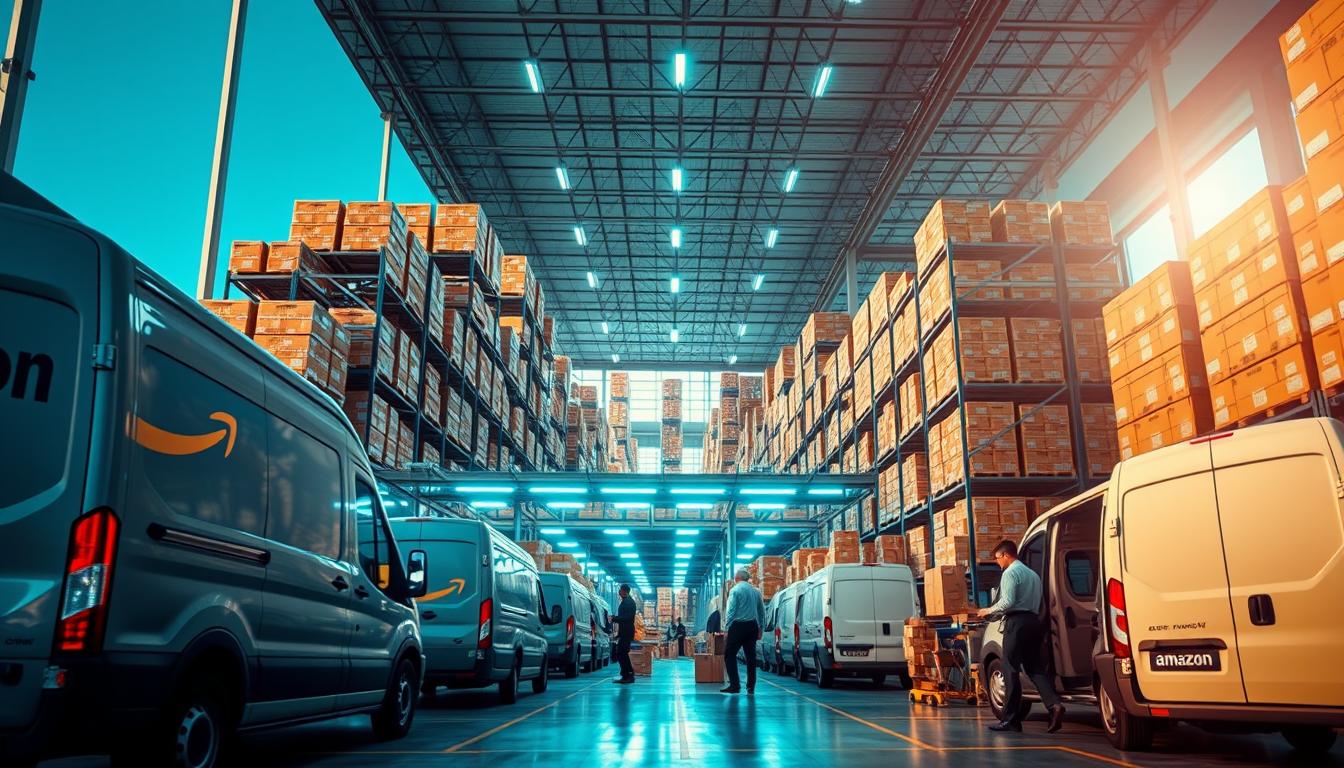
This introduction orients U.S. sellers to the building types that power fast fulfillment and lower costs. It explains how fulfillment sites, sortation hubs, delivery stations, receive points, specialty buildings, and return facilities link to speed and reliability.
The network in the united states includes massive sortable warehouses near 800,000 sq ft and non-sortable sites from 600,000 to 1 million sq ft. Same-day and Sunday windows come from close-in locations and last-mile orchestration.
This short list-style guide helps sellers see how proximity to centers cuts lead time, reduces split shipments, and improves regional availability for products.
Readers will also learn term differences, how robotics and automation keep throughput steady, and why queries sometimes surface unrelated place codes like british columbia, british columbia v3m, or ontario l6y.
Why distribution centers for amazon matter for U.S. e-commerce sellers right now
Warehouse placement close to demand hotspots directly affects delivery speed and seller margins. Proximity to major transport corridors shortens zones, cuts carrier fees, and raises the odds that Amazon picks the nearest node to fulfill an order.
That matters to sellers because better geographic alignment reduces split shipments and boosts in‑stock rates. Higher availability helps conversion and Buy Box eligibility.
Returns also move faster when routed to nearby return points, cutting transit time and refund cycles. Receive hubs speed intake of fast SKUs so replenishment can match peaks.
- Sortation sites enable Sunday delivery, lifting weekend expectations.
- Delivery stations coordinate Flex drivers and DSPs to speed last‑mile windows.
- Network density at the state level eases weather and surge risk.
| Function | Benefit | Seller action |
|---|---|---|
| Fulfillment | Faster transit & lower shipping costs | Align replenishment with demand |
| Sortation | Weekend and same‑day capability | Position SKUs for weekend fulfillment |
| Delivery | Quicker last‑mile delivery | Use local nodes to reduce touches |
Inside Amazon’s network: fulfillment centers, sortation centers, delivery stations, and more
Different facility types play specialized roles in turning an online order into an on‑time delivery. This layered approach speeds throughput and keeps error rates low.
Sortable vs. non‑sortable facilities
Sortable fulfillment centers are roughly 800,000 sq ft and often use Amazon Robotics to move small and medium products like books and housewares.
Non‑sortable sites range from 600,000 to 1 million sq ft and handle bulky items such as furniture and outdoor gear. They use different flows and slotting logic to protect large SKUs.
Sortation hubs and Sunday delivery
Sortation centers group parcels by ZIP or region to create line‑haul efficiency.
This batching is the backbone of Sunday service in many metro areas, enabling the network to extend delivery windows on peak days.
Receive buildings and peak‑season specialty sites
Receive centers (about 600,000 sq ft) intake high‑velocity inventory and push it to the right fulfillment nodes to avoid stockouts during spikes.
Specialty buildings flex during holidays, adding parallel capacity for overflow categories and seasonal surges.
Delivery stations and last‑mile orchestration
Delivery stations stage orders for local routing, assigning runs to DSPs and Flex drivers to tighten windows and reduce touches.
Automation—conveyors, scanners, robotics—keeps throughput consistent across the network.
“Understanding which facility handles which work helps sellers refine packaging, prep, and replenishment strategy.”
- Sortable facilities — small/medium products, robotics-driven throughput.
- Non‑sortable sites — bulky items, specialized handling.
- Receive & specialty — intake and peak flex capacity.
- Delivery stations — last‑mile orchestration and route assignment.
Listicle overview: the most impactful Amazon facility types for faster shipping
C sellers can use a short list to target the buildings that most affect delivery speed and stock health.
Amazon fulfillment centers remain the core throughput engines. Sortable sites use robotics and dense bin storage to compress pick‑pack cycles. Non‑sortable locations handle bulky SKUs and slow movers with different flows.
Prime Air hubs connect distant nodes by air, rebalancing inventory and cutting line‑haul time between regions. This reduces dependence on external carriers and speeds replenishment to metros with high demand.
- Fulfillment — high throughput, robotics-driven picking.
- Sortation — sequences parcels for weekend and same‑day lanes.
- Delivery stations — tighten last‑mile windows and reduce failed attempts.
- Receive & specialty sites — stage fast movers and add seasonal capacity.
- Prime Air hubs — accelerate long‑haul transfers and rebalance stock.
“Watch these facility types in target metros to prioritize launch inventory and avoid stockouts.”
| Facility type | Primary role | Seller takeaway |
|---|---|---|
| Fulfillment centers | Pick, pack, ship high volumes | Prioritize fast movers for sortable sites |
| Prime Air hubs | Air transfers between nodes | Use to rebalance inventory across regions |
| Delivery stations | Local routing and last‑mile | Optimize prep to reduce failed deliveries |
How center locations accelerate shipping, reduce costs, and improve customer service
Locating warehouses near major transport links speeds order flow and lowers per‑package cost. This geographic logic shapes transit time, handling steps, and how quickly products reach buyers.
Proximity to transportation hubs and urban demand
Placing facilities close to airports, interstates, and dense metros cuts zone counts and parcel miles. That reduces the transportation cost per order and speeds delivery windows.
Delivery stations then tighten last‑mile runs while sortation points enable weekend and same‑day options. Local returns intake shortens refund cycles and supports better customer service metrics.
- Lower transit miles: Fewer line‑haul legs reduce cost and transit variance.
- Faster delivery: Shorter lanes improve conversion and repeat purchases.
- Better product condition: Fewer handoffs mean less damage in transit.
- Predictable cycles: Sellers can align replenishment and ad spend with reliable lead times.
“Faster speed boosts satisfaction and rankings, which then increases demand routed to nearby centers.”
Returns made simple: how Amazon return and receive centers streamline reverse logistics
Local routing of returned items keeps units closer to restock paths and shortens disposition timelines. Return handling that happens regionally cuts cross‑country transit and speeds refunds.
Regional return centers reduce distance and time‑to‑refund by accepting items near the buyer. Faster credit issuance improves buyer confidence and lowers support contacts, strengthening overall service outcomes.
Receive facilities triage returnable inventory. Staff separate restockable units from liquidation or refurbishment flows so sellable stock returns quickly to fulfillment pools.
Proximity lets teams analyze defects faster and feed quality or packaging fixes back into sourcing. Streamlined reverse logistics reduces waste and transport cost, protecting contribution margins on high‑return categories.
- Fewer lost cases: localized processing cuts misroutes and clarifies disposition timelines.
- Peak resilience: local sites scale intake during busy seasons to avoid backlogs.
- Actionable data: aggregated returns highlight sizing, prep, or carrier issues.
“Coordinated reverse logistics policies translate to fewer operational exceptions and improved star ratings.”
Seller strategy: placing inventory to win the buy box and lower delivery times
Smart inventory placement shortens delivery windows and makes offers more competitive in metro marketplaces. Sellers who align stock with local demand see faster delivery promises and higher conversion.
Amazon Flex uses independent drivers to finish the last mile. Delivery stations sequence routes and speed local drop-offs. Fulfillment centers feed those stations with ready-to-ship parcels.
Key tactics:
- Seed fast-moving SKUs in a few high-volume centers near strong demand to boost Buy Box eligibility.
- Use a regional spoke-and-hub plan to cut promised delivery windows and lower split shipments.
- Pair delivery stations with Flex routing to improve on-time rates and weekend coverage.
- Scale seasonal allocations to metros with rising searches, then draw down post-peak.
- Monitor ASIN-level data to decide broader placement and protect IPI scores.
“Match packaging and prep to each center workflow to reduce defects and speed pack-out.”
| Action | Benefit | When to use |
|---|---|---|
| Regional seeding | Faster promises, fewer splits | High-demand metros |
| Flex + delivery stations | Compressed last mile | Weekend & same-day focus |
| Consolidate slow movers | Lower storage fees | Post-peak |
Tax and nexus considerations tied to fulfillment center storage
Storing stock in a third-party fulfillment location often triggers state tax rules that sellers must track closely. Physical inventory at a fulfillment site usually creates nexus and can require registration and filings in that state.
Marketplace facilitator laws mean the platform may collect and remit sales tax on marketplace sales. Still, many states expect sellers to register or file zero returns, especially when inventory sits inside a full-service fulfillment center.
- Physical inventory can create nexus and tax obligations in the state where stock is held.
- Not every facility type creates nexus; sortation and delivery nodes may not, while fulfillment sites typically do.
- New york has unique rules about third‑party fulfillment; sellers should verify current guidance.
- Returns processing locations can influence nexus analysis; track where returns are handled.
| Issue | Seller impact | Next step |
|---|---|---|
| Physical inventory | Registration & filing duties | Map SKU locations and register if required |
| Marketplace laws | Platform may remit, seller may still file | Check state rules and file zero returns if needed |
| States with no sales tax | Lower sales tax risk, other taxes may apply | Confirm income/property exposure |
“Track where platforms store units and consult a tax advisor to stay compliant as inventory moves.”
Size and tech edge: robotics-ready facilities and warehouse superiority
When robotics and warehouse management systems work together, pick rates rise and errors fall. Sortable sites average about 800,000 sq ft, while non-sortable locations span roughly 600,000 to 1,000,000 sq ft. This scale lets operations mix heavy duty racking with fast-moving automation.
Robotics and advanced conveyors in fulfillment centers cut associate travel time and boost accuracy. Vision systems, scanners, and WMS logic keep fast movers close to pack lines so picking and packing stay efficient.
Non-sortable locations use specialized equipment and racking to handle oversized products safely. Real-time visibility into dwell and exceptions helps teams clear bottlenecks before they impact SLAs.
- Stable throughput: automation evens out peak-week swings and reduces reliance on variable labor.
- Inbound control: tech speeds ASN compliance and lowers rework.
- Resiliency at scale: hundreds of centers create redundancy without slowing delivery.
“The combined result is faster, more reliable fulfillment that supports promising delivery windows year-round.”
Where Amazon fulfillment centers cluster in the United States
Several states host dense campuses that support rapid replenishment and wide next‑day reach. These clusters sit near ports, interstates, and labor pools to move stock fast into major metros.
High-capacity states lead by footprint: California, Texas, Illinois, Florida, and Pennsylvania house the largest warehouse totals. California’s Inland Empire—especially san bernardino, Moreno Valley, Rialto, and Stockton—forms one of the densest networks. Park Center Drive in Patterson and Center Drive addresses tie into OAK3 regional flow.
High-capacity states
Texas and Illinois link Midwestern and Sun Belt demand with strong rail and air lanes. North las vegas and las vegas nodes feed western metros and tie into Phoenix routes.
Per-capita standouts
Delaware, Rhode Island, Oregon, and Tennessee rank high by warehouse space per resident. New Castle hosts ILG1 and PHL7/PHL9. Logan Township and Swedesboro in New Jersey anchor flows into new york and Philadelphia. Boulder Drive in Breinigsville serves Mid‑Atlantic logistics.
| Cluster | Key locations | Seller benefit |
|---|---|---|
| California Inland Empire | San Bernardino, Park Center Drive, Stockton | Fast replenishment to West Coast metros |
| Mid‑Atlantic | New Castle, Boulder Drive, Logan Township | Quick access to NY & PA markets |
| Desert West | North Las Vegas, Las Vegas | Resilient coverage across Southwest lanes |
“Clusters let sellers rebalance inventory quickly to meet seasonality and promotional spikes.”
State-by-state highlights: notable center locations sellers should know
Knowing which sites feed a metro lets sellers cut transit days and avoid last‑mile holes. This short guide points to the specific hubs that move volume and shape delivery promises.
California corridor: San Bernardino, Moreno Valley, Rialto, Stockton
san bernardino anchors ONT clusters near 1910 and 2020 E Central Ave, giving Inland Empire reach into Southern California markets.
moreno valley’s ONT6/HLA3 at 24208 San Michele Rd supports inland throughput. SNA4 in Rialto and OAK3 on 255 Park Center Drive in Patterson feed Northern routes and ease Bay Area pressure.
Texas triangle: Dallas‑Fort Worth, Houston, Austin, San Marcos
The Texas cluster centers on Dallas‑Fort Worth (FTW1, FTW3, DFW7) and fort worth logistics lanes. Houston (HOU2, HOU6) and Austin/San Marcos (ATX1, SAT2) balance Gulf and Hill Country demand.
Northeast nodes: Robbinsville NJ, Swedesboro/Logan Township, Staten Island NY
Robbinsville’s hub at 50 New Canton Way (EWR4) links to major turnpikes. Swedesboro / Logan Township (TEB3) and Staten Island (JFK8) aggregate Mid‑Atlantic capacity near New York.
- Why it matters: highway access and air/parcel adjacency speed outbound lanes.
- Seller action: seed fast SKUs near these locations to tighten promises.
- Observation: watch clusters like boulder drive to spot true backbone nodes.
| Region | Key address / code | Seller takeaway |
|---|---|---|
| California | 1910 & 2020 E Central Ave; ONT6/HLA3 San Michele Rd | Fast West Coast outbound and Bay Area relief |
| Texas | DFW7 / FTW1 / HOU6 / ATX1 | Central reach to Sun Belt metros |
| Mid‑Atlantic | 50 New Canton Way; Logan Township; Staten Island | Dense coverage into new york and PA markets |
“Place inventory near these hubs to shorten lead times and reduce split shipments.”
Spotlight on hubs: Kentucky’s Worldwide Blvd. Hebron and the CVG cluster
Hebron’s CVG campus ties airport ramps to high-volume handling, speeding regional transfers overnight.
The CVG group includes CVG1 at 1155 Worldwide Blvd. Hebron, KY 41048; CVG2 at 1600 Worldwide Blvd. Hebron, KY 41048; and CVG3 at 3680 Langley Dr. Hebron, KY 41048.
Addresses and local nodes
These buildings sit minutes from Cincinnati/Northern Kentucky International Airport, letting air lifts and line-haul trucks share windows.
- Multi-building redundancy: CVG1, CVG2, and CVG3 support cross-dock agility and high throughput.
- Regional reach: Air links enable overnight repositioning to Eastern and Midwestern metros.
- Supporting nodes: CVG8 in Florence, plus Erlanger and Shepherdsville facilities, widen labor and dock capacity.
Operational benefit: seeding fast movers into this cluster improves reliability east of the Mississippi and shortens lead times.
“Clear address naming—worldwide blvd., center drive style roads—reduces routing errors and missed departures.”
| Node | Address | Seller takeaway |
|---|---|---|
| CVG1 | 1155 Worldwide Blvd. Hebron, KY | Primary induction near air ramps |
| CVG2 | 1600 Worldwide Blvd. Hebron, KY | Additional docks for surge |
| CVG3 | 3680 Langley Dr. Hebron, KY | Cross-dock and staging |
Western expansion: North Las Vegas, Reno, and Phoenix metro growth
The Southwest now hosts a growing cluster of inland hubs that shorten lanes and improve resiliency. These locations link Southern California with the Mountain West and the Sun Belt.
North Las Vegas: LAS6, LAS7 and surrounding facilities
North Las Vegas has emerged as a western linchpin. LAS6 and LAS7 sit on Nexus Way and Tropical Parkway and support fast intermountain flows.
las vegas positioning helps both SoCal adjacency and Mountain West reach. Shorter lanes cut transit variance and improve two‑day promises.
Phoenix, Tolleson and Goodyear nodes
PHX3, PHX5 (Goodyear), PHX7/PHX8 and GYR3 in Avondale, plus Tolleson PHX9, expand capacity across Arizona.
Reno adds redundancy—RNO4 on North Virginia St. aids Northern California and Pacific Northwest surges.
- north las vegas buildings enable rapid backfill when Inland Empire demand spikes.
- centers in these metros interconnect to SoCal and reduce coastal port reliance.
- Shorter intercity lanes improve shipping predictability and lower weather risk.
| Node | Key code | Seller benefit |
|---|---|---|
| North Las Vegas | LAS6 / LAS7 | Intermountain reach, quick backfill |
| Phoenix metro | PHX3 / PHX5 / GYR3 | Arizona demand, west‑east flows |
| Reno | RNO4 | West Coast redundancy |
“Placing inventory across Phoenix and north las gives sellers more consistent two‑day coverage.”
Overall, this footprint balances labor, land cost, and highway access while supporting seasonal tourism and event spikes. Sellers can use these centers to improve amazon fulfillment agility in the Southwest.
Key corridors sellers search for: Central Ave. San Bernardino and South Girls School Rd., Indianapolis
Corridors such as Central Ave. in San Bernardino and South Girls School Rd. in Indianapolis concentrate volume, labor, and transport access that sellers watch closely.
The ONT/SBD corridor anchored at 2020 central ave. is one of the Inland Empire’s busiest multi-building campuses. ONT2/3/4/7 sit at 1910 & 2020 E Central Ave, while SBD2 operates near South Waterman Ave.
These San Bernardino nodes pair with Rialto and Redlands to absorb peak flows without breaking delivery promises. The Moreno Valley site at 24208 San Michele Rd. helps cross-traffic between ONT and SBD facilities.
2020 Central Ave. and the ONT/SBD cluster
Sellers searching for central ave. san or ave. san bernardino often land on multi-gate campuses that handle massive SoCal volume.
Referencing 2020 central and central avenue when booking carriers helps pinpoint the correct gate or appointment desk and cuts missed appointments.
710 South Girls School Rd. and Indy’s IND network
In Indianapolis, 710 south girls school rd. (IND4/IND8) ties into Plainfield and Whitestown to form a resilient Midwestern network.
Many sellers search girls school to verify which building receives inbound freight or where ASIN reslots happen. The corridor approach leverages shared labor and hill road-like arteries to keep throughput steady.
- Benefits: reduced transfers to major metros and clearer carrier routing.
- Action: stage inventory into these corridors to lower transfer times to the Midwest and West Coast.
| Corridor | Key addresses / codes | Seller takeaway |
|---|---|---|
| ONT / SBD (Inland Empire) | 1910 & 2020 E Central Ave; SBD2 South Waterman Ave; 24208 San Michele Rd | Seed fast SKUs here to improve West Coast promises |
| Indianapolis (IND) | 710 South Girls School Rd. (IND4/IND8); Plainfield; Whitestown | Use IND nodes to reach Midwest metros with fewer transfers |
| Corridor arteries | Central Avenue; Hill Road-style industrial routes | Helps carriers, 3PLs and sellers coordinate appointments |
“Using known corridors like 2020 Central Ave. and 710 South Girls School Rd. reduces appointment errors and speeds replenishment.”
Smaller-market leverage: per-capita capacity in Delaware and beyond
Smaller states can hide outsized logistics power that savvy sellers can use to reach big metros fast.
Middletown and new castle host high-capacity nodes (ILG1; PHL7/PHL9) that feed Philadelphia, Baltimore, and New York with short line-hauls.
Delaware’s no-sales-tax status can simplify tax treatment on marketplace-collected orders. That makes placing inventory in these regions attractive to sellers who need cleaner tax signals and quicker processing.
Per-capita standouts like Rhode Island, Oregon, and Tennessee also offer strong warehouse space relative to population. Tennessee’s central location helps extend two-day coverage across the Southeast.
- Smaller markets reduce reliance on crowded coastal hubs and ease appointment windows.
- Local returns intake speeds refunds for Mid‑Atlantic and New England buyers.
- Sellers can test regional assortments without overcommitting inventory.
| Market | Advantage | Seller action |
|---|---|---|
| Delaware (Middletown, new castle) | Short line-hauls to PA/MD/NY, no sales tax | Seed fast SKUs and monitor tax effects |
| Rhode Island & Oregon | High space per resident, lower real estate pressure | Use to stage niche assortments |
| Tennessee | Central lanes, strong parcel links | Expand two-day coverage to the Southeast |
“Viewing capacity on a per-capita basis reveals hidden locations that improve resiliency and lower cost.”
Returns, service, and customer satisfaction: aligning inventory with demand
Tying inventory to regional demand keeps delivery promises tight and reduces buyer complaints. Sellers who map fast movers to nearby centers see clearer delivery windows and fewer late shipments.
Local return processing speeds refunds and lifts post‑purchase sentiment. Delivery stations and return nodes help close the loop between an unhappy buyer and a quick resolution.

Receive facilities can reposition high‑velocity products quickly when a trend emerges. That rapid reallocation prevents stockouts during viral demand spikes.
- Align inventory to demand centers to reduce late deliveries and support strong customer service metrics.
- Local returns shorten refund time, improving review quality and repeat purchases.
- Placement near large metros enables same‑day and weekend delivery that buyers expect.
- Fulfillment alignment lowers cancellations and keeps high‑velocity products available.
| Benefit | Impact | Seller action |
|---|---|---|
| Faster refunds | Higher post‑purchase satisfaction | Seed returnable SKUs near regional nodes |
| Better first‑attempt delivery | Fewer WISMO contacts | Place products near local routing points |
| Rapid reallocation | Stable lead times during spikes | Monitor regional sales and shift units |
“A tighter loop between sales data and replenishment drives better experience, better ratings, and stronger Buy Box outcomes.”
Accounting automation: syncing Amazon transactions to QuickBooks or Xero
Syncing marketplace transactions directly to QuickBooks or Xero cuts hours of manual work each month. Sellers can route settlements, fees, shipping, and returns into accounting tools automatically using integrations like PayTraQer.
Reducing manual entry and reconciling fees, shipping, and returns
Automated imports reduce reconciliation time and the chance of missed adjustments. A correct mapping sends FBA fees, storage, and shipping expenses to the right ledgers so P&L and balance sheets stay accurate.
- Daily syncs give near real‑time cash flow insight to guide reorder decisions.
- Clean transaction data simplifies multistate tax prep and audit trails.
- Standardized list amazon fulfillment mappings prevent account‑coding drift.
- Automations match bank deposits to settlements and speed dispute resolution.
“With reliable books, finance teams spend time forecasting rather than wrangling spreadsheets.”
From location list to action plan: how to use Amazon center locations to optimize your supply chain
Translate regional data into a tight action plan that improves shipping speed and reduces cost.
They should seed fast movers in 3–5 anchor center locations such as CVG1/2/3 on Worldwide Blvd. Hebron, a western node near North Las Vegas, a Texas hub around Fort Worth, plus New Castle and Logan Township to cover New York and the Mid‑Atlantic.
Validate address strings like Center Drive, Bethel Road, and Hill Road to cut appointment misroutes. Do not mix international tags like British Columbia V3M or Ontario L6Y into U.S. routing data.
Define replenishment tiers: A items in 3–5 nodes; B items in 2–3; C items consolidated. Measure shipping cost per order, on‑time percent, and cancellation rates, then revisit quarterly to rebalance products and sustain margin.