Amazon’s Electric Van: Revolutionizing Sustainable Logistics
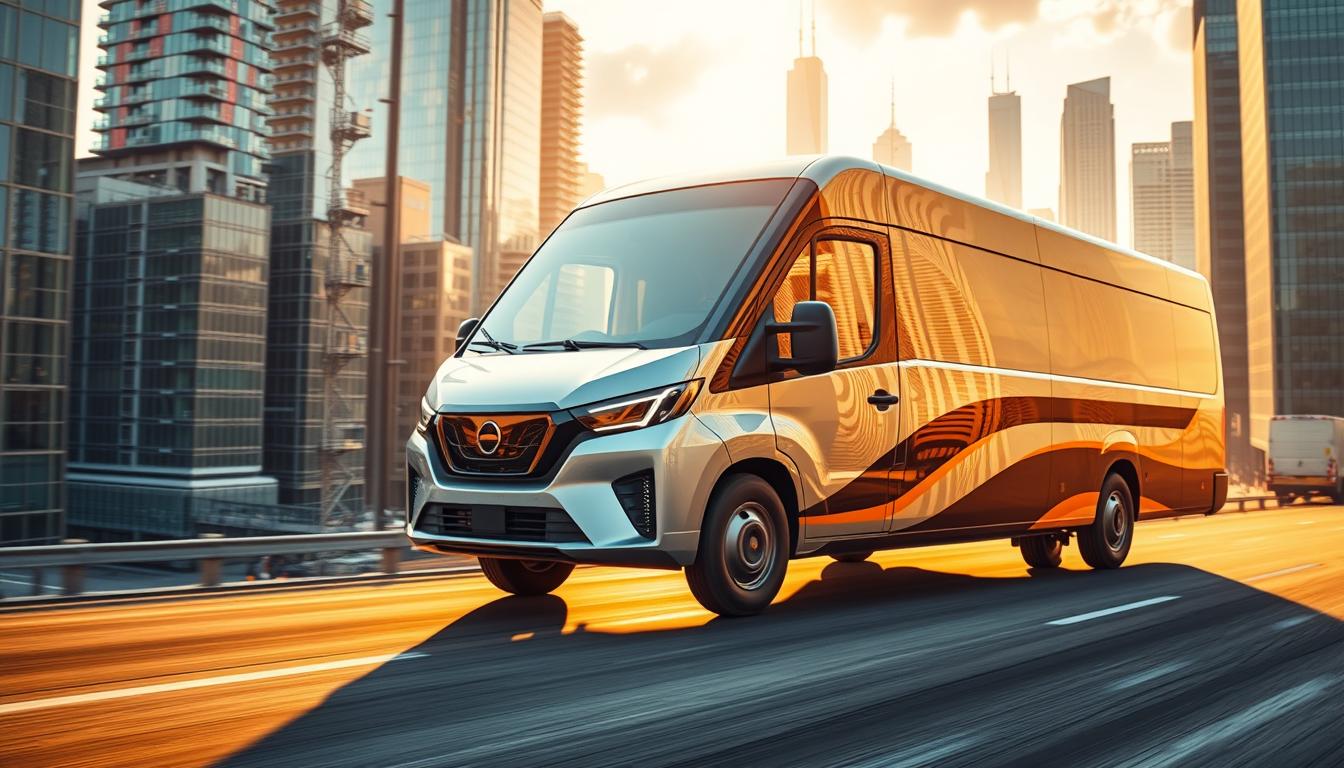
In recent years, a major logistics program moved from pledge to pavement. It began with a climate commitment in 2019 and aimed for net‑zero carbon by 2040.
The program put purpose-built vehicles and charging infrastructure on the road quickly. By 2024 they operated tens of thousands of custom vans and delivered over a billion packages. This rollout proved the model could scale beyond pilots.
Design and safety were central. The vehicle featured 360-degree visibility, ADAS, ergonomic cargo areas, and driver-focused controls. Those upgrades made the fleet safer and more efficient for daily delivery work.
The effort did not stop at hardware. It was one part of a broader decarbonization push that included lighter packaging, recycled content, and new low‑carbon fuels. Together, these moves framed a full-system approach to sustainable delivery and set a clear news milestone for logistics.
amazon electric van rollout hits key milestones across U.S. cities
Summer 2022 marked the start of wider deployments that put thousands of new delivery vehicles onto city streets.
From sketch to street: 25,000+ vans delivering in thousands of cities
By 2024 more than 25,000 vans were operating across the U.S., running regular routes in dense and suburban corridors.
Training, route planning, and charging play key roles in keeping each driver and vehicle on the road.
Where they’re on the road now
Deployment spans major metros like New York, Seattle, Dallas, Phoenix, and Miami, plus dozens more including Austin, Chicago, and San Diego.
Surpassing 1 billion packages delivered in 2024
In the past year these delivery vans moved over 1 billion packages, a sign the program moved past pilots to steady operations.
Amazon also expanded into Europe with more than 300 vans announced for Germany while following a path toward 100,000 electric by road 2030.
| Metric | Start Year | 2024 Status | Notes |
|---|---|---|---|
| Operational vans | 2022 | 25,000+ | Growth across thousands of cities |
| Packages delivered | 2022 | 1,000,000,000+ | Annual milestone signaling scale |
| International rollout | 2023 | 300+ (Germany) | Early European deployments |
Safety, design, and driver-first features redefining last‑mile deliveries
A safety-first layout reshaped the cabin and exterior to help drivers work smarter and safer. The package combined broad sightlines and layered protection so drivers could focus on fast, reliable delivery stops.
360-degree sightlines and automatic emergency braking
Stitched exterior cameras, radar, and a large windshield increased visibility and cut blind spots. Advanced driver-assistance systems added automatic emergency braking and collision warnings to reduce incident risk on tight routes.
Adaptive assistance and lane support
Adaptive cruise control and lane-keeping assistance helped steady the vehicle in dense traffic. These ADAS layers backed the driver with timely alerts and smoother braking during busy delivery runs.
Driver comfort, access, and cargo ergonomics
The interior focused on the driver: automatic door locking, a powered bulkhead door, and ventilated seats reduced fatigue. A strengthened driver’s side door and a redesigned cargo area sped handoffs and improved access.
- Navigation ties route plans to the interface for simpler stops.
- Lighting, signaling, and detection improved visibility around the vehicle.
- Design choices reduced cognitive load so drivers could concentrate on safe deliveries.
Building the backbone: charging, fleet operations, and decarbonization
A nationwide charging grid and new depot practices became the operational spine for the fleet. This foundation kept routes predictable and helped managers plan vehicle time at stations in each area.
32,000+ chargers at 180+ delivery stations
32,000+ chargers at 180+ stations powering electric delivery vehicles
The program installed more than 32,000 chargers across 180 delivery stations to keep electric delivery vehicles ready for daily runs. Co-locating chargers with vehicles and drivers created predictable charging windows and reduced downtime.
Beyond vehicles: lighter packaging and recycled content
Decarbonization reached beyond the battery. Packaging weight dropped 43% since 2015, avoiding over 3 million metric tons of waste. Plastic air pillows were removed globally in 2024 and replaced by paper filler made from 100% recycled content in North America.
“Charging, packaging, and site planning functioned as integrated parts of a larger sustainability strategy.”
- The infrastructure scaled to add more electric delivery vehicles and delivery vans across the road network.
- Amazon also invested in green hydrogen and ultra‑low carbon electrofuels for harder-to-electrify segments.
- Amazon also committed more than €1 billion in Europe to accelerate charging and industry innovation.
Result: sites coordinated grid capacity, charger placement, and queuing so each driver had access to reliable charging and lower carbon intensity across the area.
Inside the Rivian partnership: models, specs, and a growing electric fleet
The collaboration produced a modular family of delivery models that match route types and cargo needs.
Rivian built the EDV/ECV series on the RCV platform in three sizes. These are nominally the 500, 700, and 900 models.
EDV/ECV sizes (500/700/900): cargo volume, payload, and platform details
The lineup offers roughly 500, 660, and 840 cubic feet of cargo, with a stand‑up interior for fast loading.
Each model uses a commercial steel chassis and suspension tuned from Rivian’s R‑platform to improve durability on delivery routes.
LFP batteries, Enduro motors, and range targets for dense urban routes
Early units used a Bosch dual‑motor front‑wheel drive. In Q1 2023 Rivian moved to a single Enduro motor and LFP battery packs.
The switch cut costs and simplified supply while targeting about 150 miles of urban range. Charging supports up to 150 kW DC and 11 kW AC onboard.
From exclusivity to broader fleets: ECV deliveries beyond Amazon
Initially exclusive, the Delivery 500 and 700 opened to other fleets in late 2023 and expanded in 2024–2025.
Third‑party evaluations, including a USPS Delivery 500 test, signaled interest from public and private operators.
Key features and fleet impacts:
- Stand‑up cargo and ergonomic access speed handoffs for each driver.
- Serviceable architecture lowers cost of ownership for fleet managers.
- Safety systems—cameras, radar, and lighting—support busy stop patterns.
| Model | Cargo (cu ft) | Range target | Charging |
|---|---|---|---|
| 500 | ~500 | ~150 miles | 150 kW DC / 11 kW AC |
| 700 | ~660 | ~150 miles | 150 kW DC / 11 kW AC |
| 900 | ~840 | Smaller battery for dense routes | 150 kW DC / 11 kW AC |
Result: the family gave fleets a flexible, purpose‑built foundation to scale delivery vehicles toward the 100,000 electric goal without sacrificing safety or daily performance on the road.
What’s next on the road to 2030: scaling to 100,000 electric delivery vans
Planners aim to balance cargo needs, charger capacity, and driver workflows as deployments expand.
Scaling to 100,000 electric delivery vans will lean on lessons from the 25,000+ vehicles and the billion packages milestone. Teams will align depot chargers with route plans so each driver and vehicle meets daily targets.
Operations will pair lighter packaging and supply chain tweaks to cut carbon per package. Ongoing safety and design updates will refine door actuation, cab access, and navigation integrations based on driver feedback.
Result: a steady, data-driven roll‑out that adds delivery vans and expands the charging footprint while keeping service reliable on the road 2030.